TOP 10 -2025
In this article I will share with You my personal top 10 images I took in 2025. In chronological order cause picking 10 best is hard enough. I will try to give You a bit of a back story to every shot and discuss what I like about each one.
This year I’ve spent over 100 days in the field, while having a full time job and being a masters student. A lot of effort was put into projects that didn’t really pan out (yet) and in general I started gravitating even more to my wider lenses often leaving the 400/2.8 at home. Showcasing wildlife in it’s environment has been a passion of mine for years but I think this year the top 10 really shows this off finally.

Eurasian Pygmy Owl, Poland: R5 + 400/2.8 II + 2x TC , f5.6, iso 2000, 1/200s at 800mm
8th of March: Together with my good friend and a very talented young photographer Kuba Woźny we went to Bialowieza forest to look for Pygmy Owls - Europe smallest owls. After walking we spent a day walking around the forest covering more than 20 km during which we found 5 Pygmy owls, but all on the tops of trees, we followed the sixt call of the day and got led to a gorgeous part of a forest were we could observe a pair of those amazing birds mating over 5 times! We also spotted the nest and thanks to paper work we submitted after that this part of a forest is now protected! It was a very emotional day in the field that I described as my best day ever while recording an IG story, so this image is here in the top 10 to comemorate this outing.
Photographically I really like the moody lighting of a dense forest and a slither of light just sneaking into the scene, while the branch is not perfect I like the rugged and natural look of it.

Black-legged kittiwake, Norway: R3 + 70-200/2.8, f2.8, iso 1600, 1/800s at 200mm
25th of March: First image here from my trip to northern Norway with my Dad, and my friends Julian and Jan. While exploring the arctic cities I was fascinated by Kittiwakes using windows as nesting spots, so one snowy blue hour I decided to explore Vardo with just a 70-200 and try to show off this behavior. I quickly found this blue window with a bird chasing others off and calling constantly, which made for a nice pose.
I love the symmetry of this image being slightly put off by the bird which is counter balanced by the pole in the bottom right. The blue hour light and slight snowfall created great mood which I think works well with this stunning bird. On a larger screen You can also see how nicely the yellow bill stands out from the scene. I’m growing more and more fondly of urban nature type of shots and this one is great to have in the portfolio.

Eurapean Shag, Norway: R5 + 14-35, f14, iso 250, 1/2500s at 17mm
27th of March: An image from the same trip but this time from the amazing Hornoya island. Most photographers go there to photograph puffins (which I of course also did) but my main target where Shags. I wanted to capture their unique silhouettes with the chaos of the cliffs behind. For that I needed to use a wide lens so when I saw this Halo next to the sun I instantly reached for my second body and crawled up to this Shag who was kind enough to stroll in just the right spot at the right time. I shot over 100 shots of this scene in less than 10 seconds and picked this one as the Kittiwake in flight added another dimension to this shot.
I love the natural framing of this shot, as the cliffs and the halo frame the main star of the show. In editing I wanted to keep the sun as close to the center as possible while giving the gull enough room at the top. I also decided to convert in to black and white as colors seemed to be distracting from the textures and shapes I really liked in this image.
Eurapean Shag, Norway: R5 + 14-35, f13, iso 2000, 1/2000s at 16mm
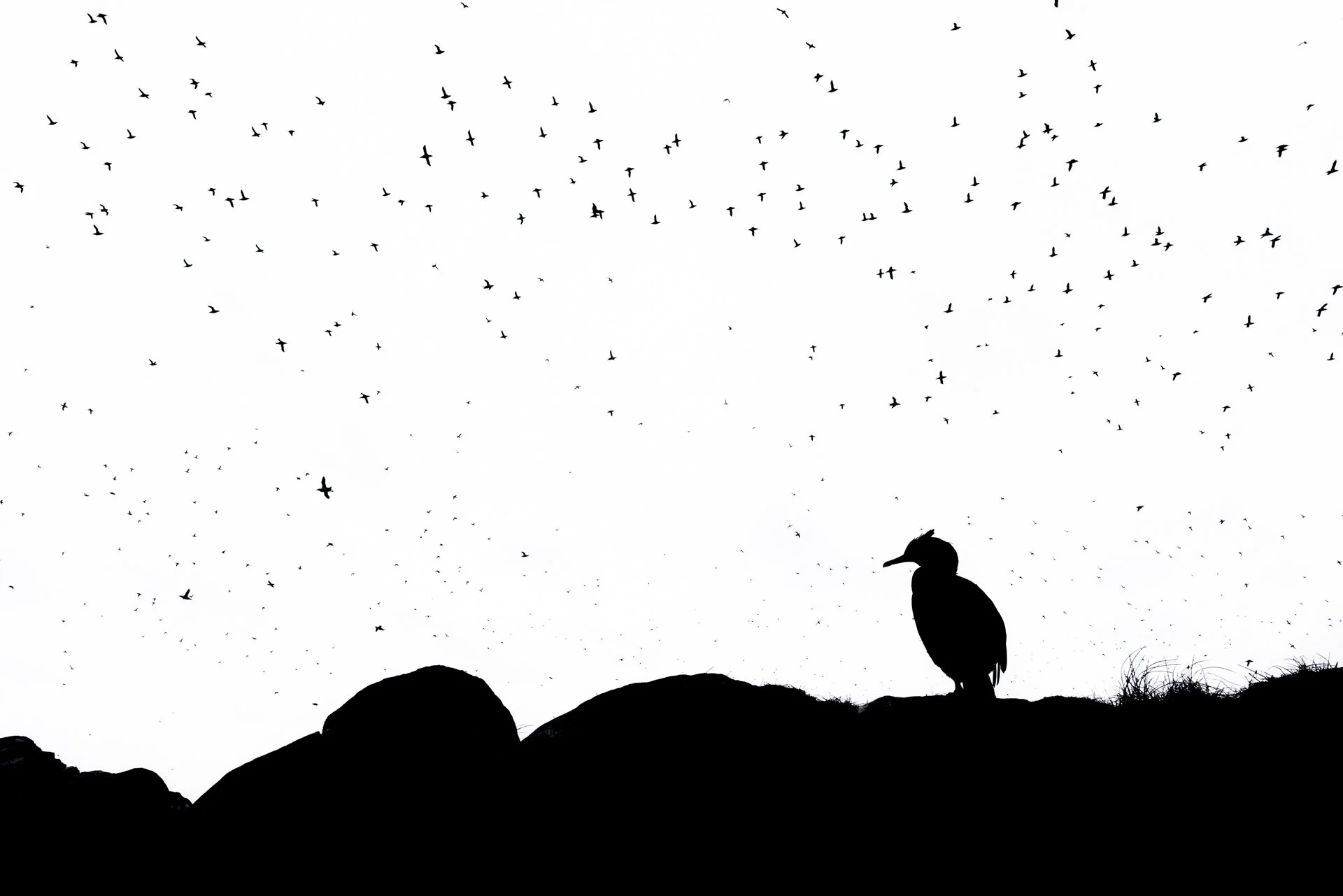
27th of March: Same hour and idea as the previous image this time a different Shag and with hundreds of Guillemots circling the island in the background. When the birds started the flybys I wanted to capture this chaos with something in the foreground and this Shag was a perfect model. It’s one of the images I had pre visualized before the trip and around which I planned the whole thing so I’m very glad it worked!
I decided to go fully monochrome for this shot to simplify the scene. While picking from the whole series I looked for the position of birds in the background not to cross the Shag in any way and for the least number of them to be cut by the edge of the frame. The final pick was made due to the Guillemot on the left side of the frame having the perfect pose adding another point of interest to the shot.
Black-legged Kittiwake, Norway: R3 + 100-500, f13, iso 6400, 1/2500s at 151mm
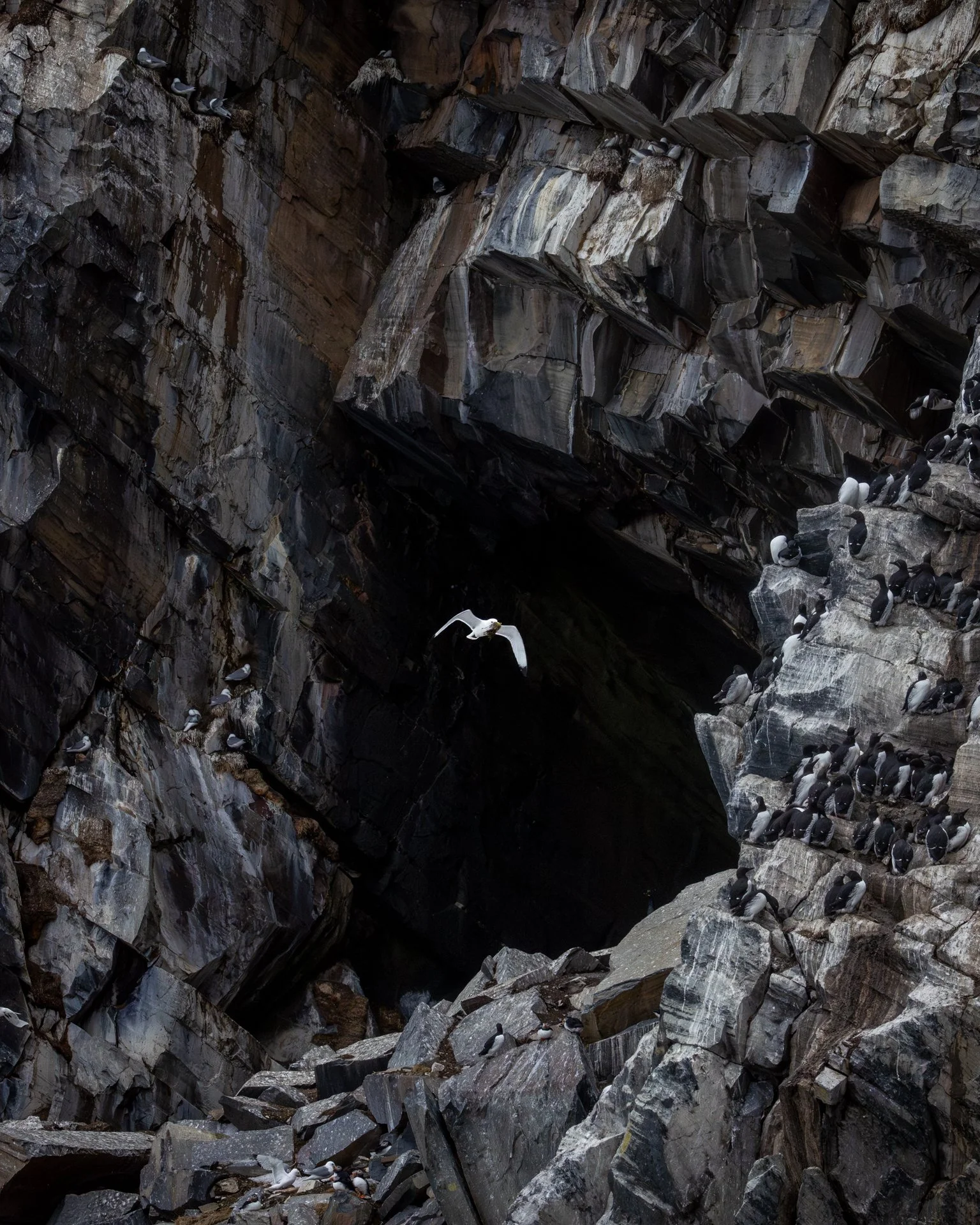
27th of March: Yep the same day again… While You can get extremely close (closer than 1m/3ft) to the birds on Hornoya. I find that those images don’t tell the full story of the place. I found a lookout point on the island in which You could look into the cave which creates dramatic backdrop. I zoomed out and patetienly waited for a kittiwake to fly in just the right spot, after about 30 minutes I got my shot.
I purposefully composed it wide to include colonies of birds on the rocks next to the cave to give more content to the image. I liked both the pose and the fact that the bird had some nesting material in its beak adding to the cliff story background. I closed down to f13 to make sure a lot of the cliffs are still in focus, and You can see the birds nesting there clearly if You just look carefully enough.

Eurasian Nightjar, Poland: R3 + 28-70/2, f2, iso 40000, 1/800s at 32mm
5th of June: This has been the second season I spent this the nightjars breeding localy, I wanted to convey my story of nightjar breeding flight, which is a giant moth like bird hovering meters from You and creating this amazing sounds and claps. I also wanted to include pine trees in the scene as they are what I relate to a perfect nightjar habitat. After spending 5 outings well after sunsets there I finally got this shot which I’m pleased with.
Another case of natural framing of the subject, this time by the pine trees and clouds, which shift the viewers attention to the Nightjar in the perfect display flight pose. As You can see I pushed the settings very hard but still ended up with a usable image 50 minutes after sunset (while photographing in the East direction).
Common Tern, Poland: R3 + 100-500, f7.1, iso 3200, 1/1000s at 500mm
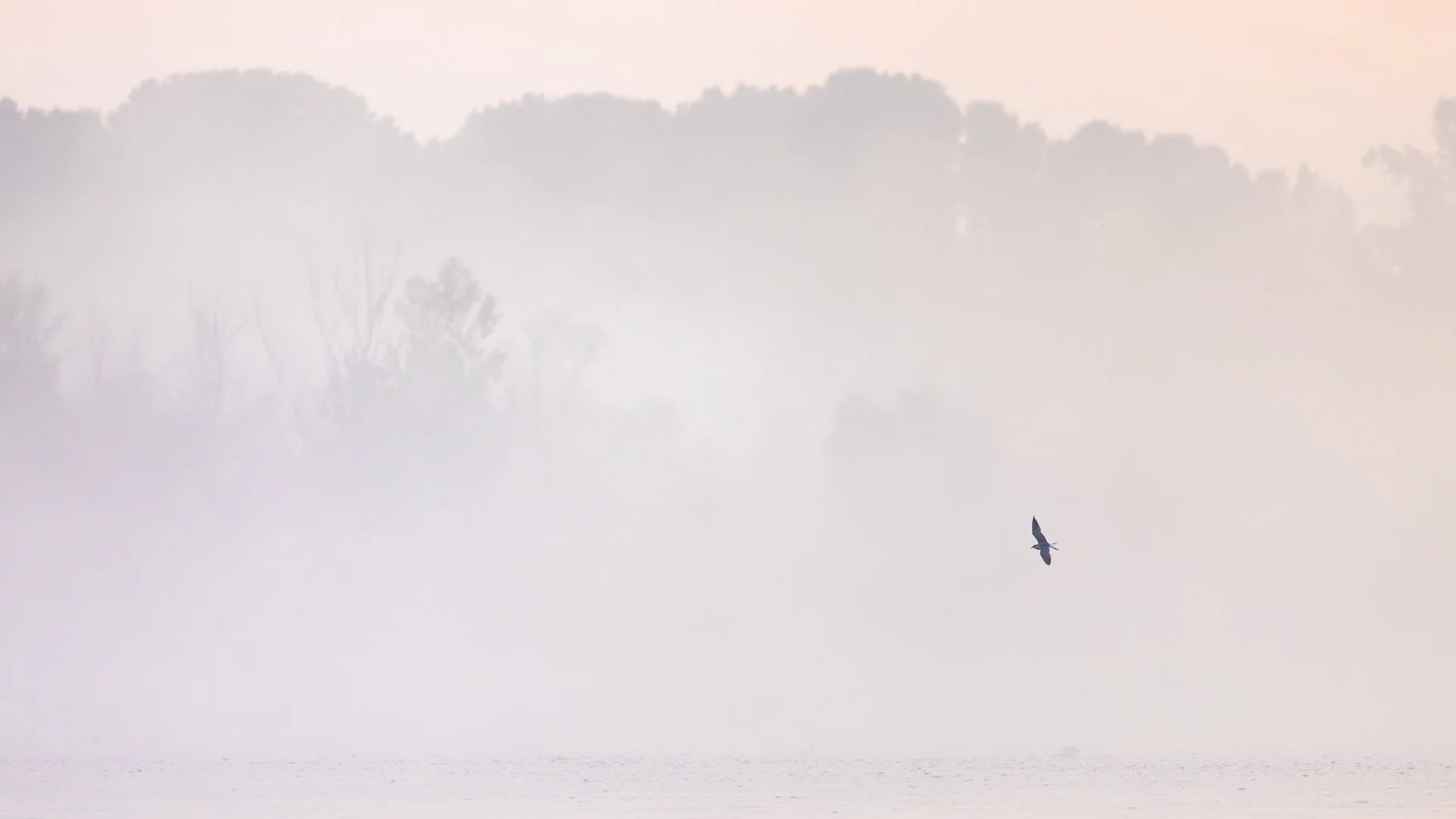
15th of July: This year I made a promise to myself that every time there will be a chance for fog I will go out and shoot, this image is a result of those outings during the summer. I found a lovely spot were terns were feeding each morning and it was just the matter of getting the right conditions.
I love the layers in this shot, as well a subtle pinkish light from the sun which was just about to peak behind the trees at the other side of the river. Bird posed beautifully and the island appeared just enought to add additional interest to this photo.
Common Kestrel, Poland, R3 + 100-500, f5.6, iso 1600, 1/3200s at 343 mm
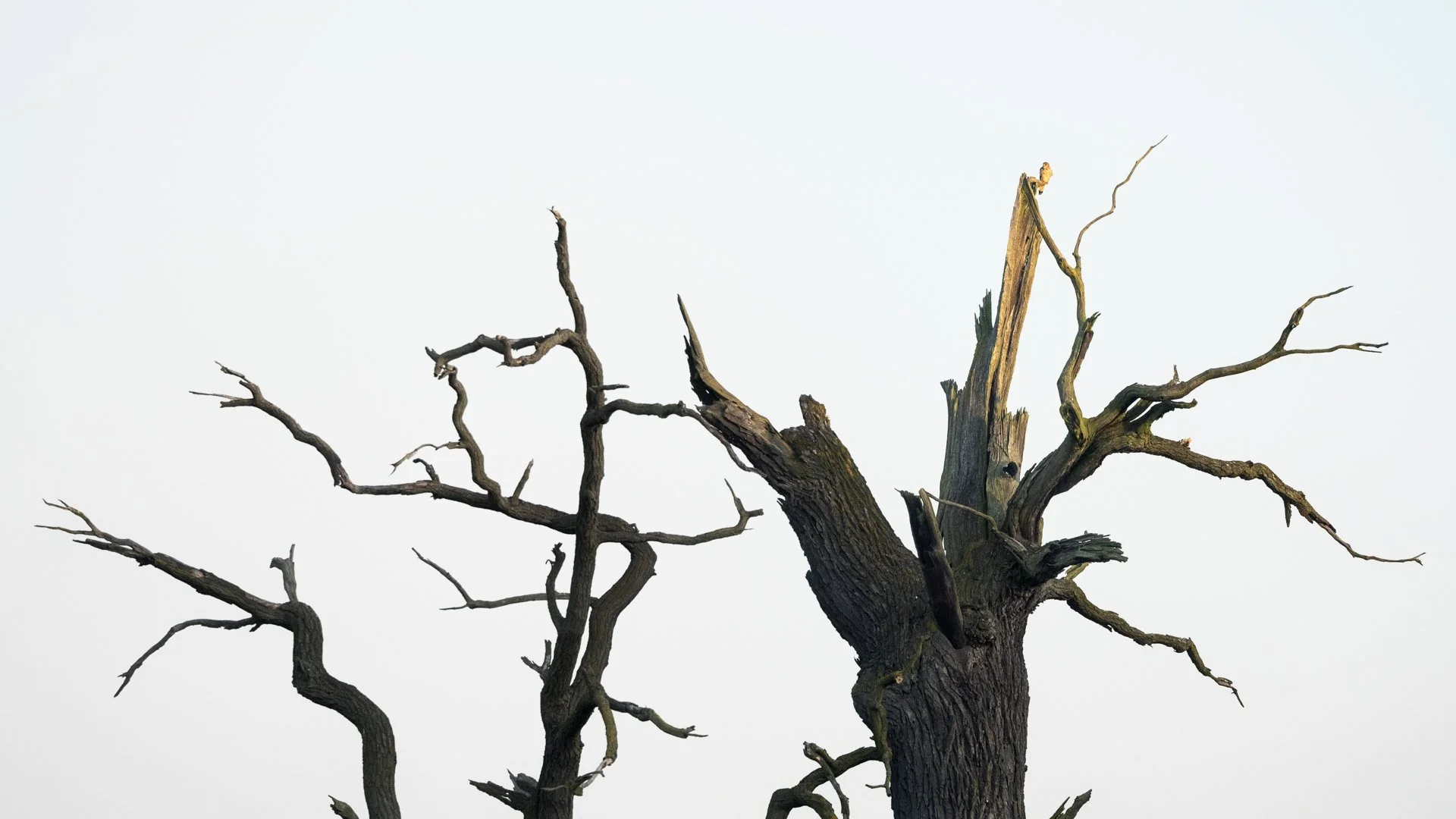
15th of August: This year I explored Greater Poland region for the first time, and Rogalin park which I visited with Kuba Płachetka made great impression on me. Majestic dead oaks, which could have lived for more than 500 years are used by raptors as posts to hunt rodents on the nearby meadows. I was really excited to find this Kestrel on one of the trees which was just getting hit by the first light of the day.
I decided to shoot it high key and create a graphic image that’s nearly monochrome but the subject is light by the sun creeping in. While this image might be too small in the frame for some I love the way the branches twist and the bird stands still in the light.
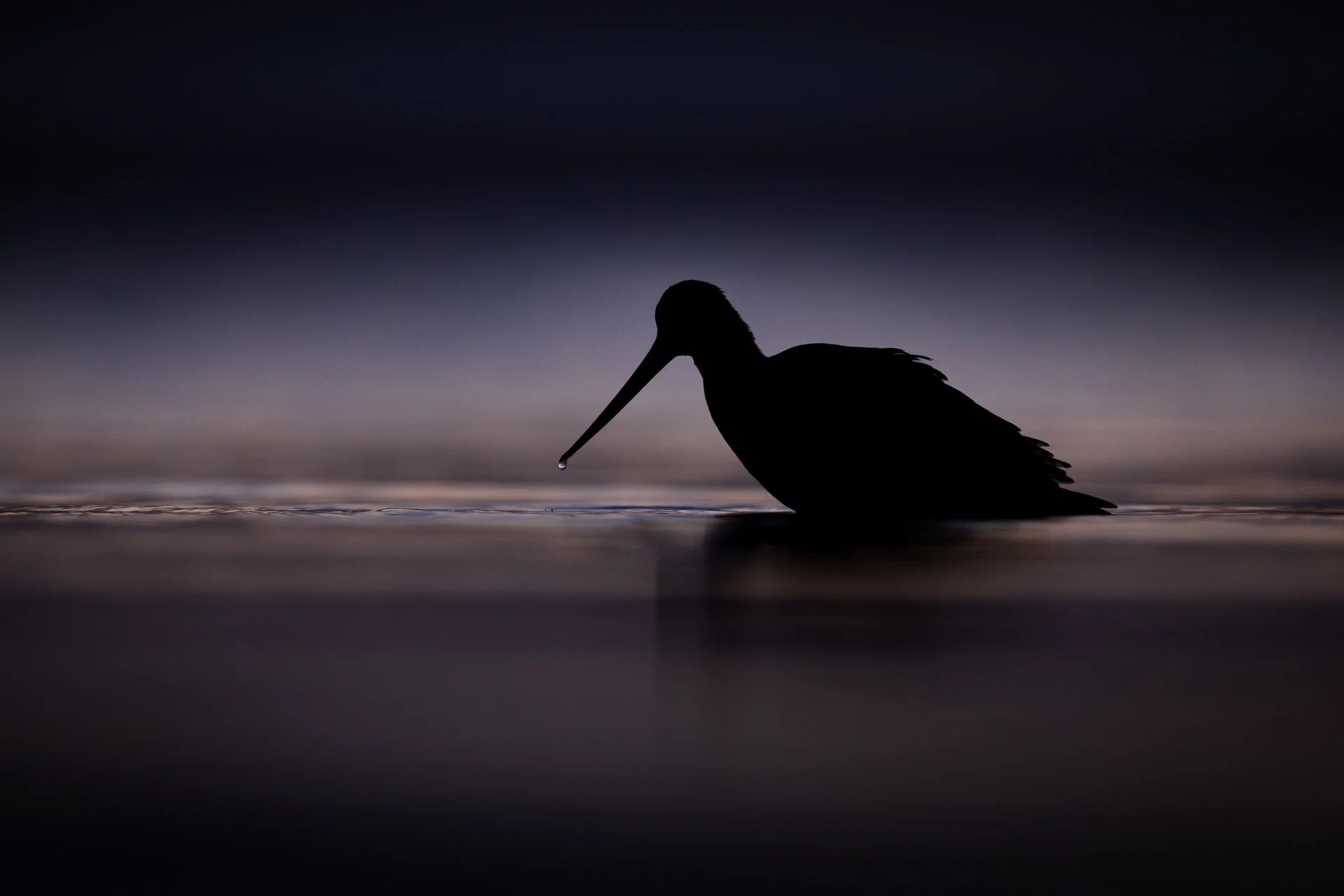
Bar-tailed Godwit, Poland, R3 + 400/2.8 II, f2.8, iso 1250, 1/2000s at 400mm
27th of September: Shorebird migration is always a special time for me, I usually visit Vistula estuary in September to photograph them, this year it might have been my last time as the sheer number of photographers made me not enjoy shooting there. But before they arrived 40 minutes before sunrise I got this shot of a Godwit feeding in the shallow water of a small bay forming thanks to a large sandbar (top black bar).
The bird looked nicely framed by the mud on my side and the sandbar on the other, and by underexposing heavily I managed to create a moody scene with just a find of duck pinkish light. The drop of water on the bill was a nice touch.
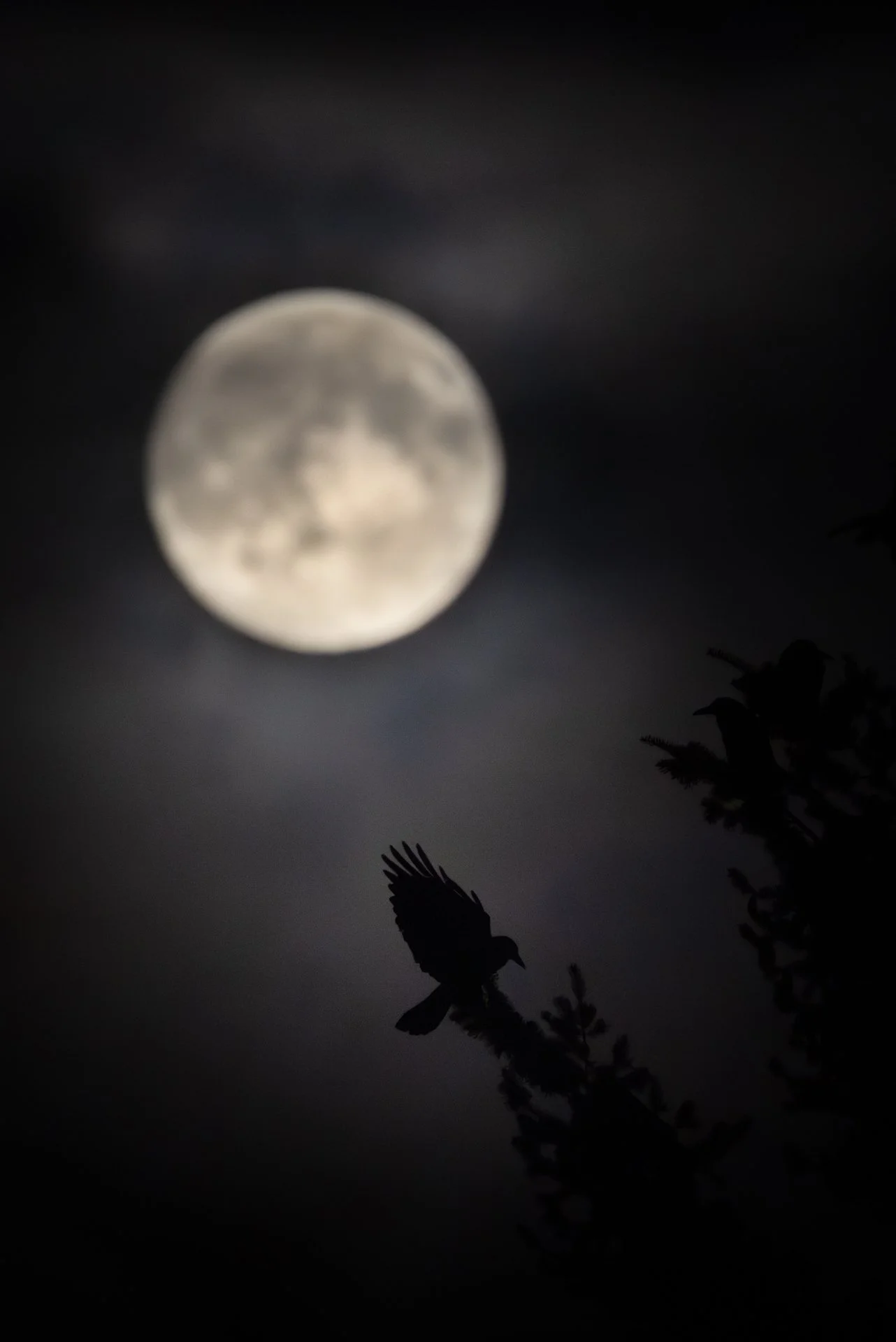
Rook, Poland: R5 + 100-500, f7.1, iso 3200, 1/1000s at 500mm
4th of November: For my last shot I picked a very local shot, taken on my way home from Uni right before the full moon. I went to a place I know Rooks roost at and tried to line up a nice composition. The clouds were just right as they got hit by the light but didn’t block the moon.
While this is certainly not a conventional composition (bird is looking out of the frame) I think it works as the misterious atmosphere and the full moon are enough of the interest matter to counteract the landing Rook. If You look really carefully You will find a second bird which I think adds to the story of communal roosting of corvids.